

B2B SaaS positioning in the AI era demands fundamental rethinking as software research increasingly happens through AI assistants rather than traditional websites. Business owners and CEOs face a stark reality: buyers now discover, evaluate, and shortlist solutions without ever clicking through to company sites.
The data paints a compelling picture. AI-native platforms like ChatGPT and Perplexity have become the second most common source for qualified leads at 34%, behind only social media at 46%. Additionally, 78% of B2B companies now implement AI across at least one business function, with buyers using these same tools for research. Moreover, only 11% of B2B marketers claim to have 75-100% of their content ready for AI discovery, creating a massive opportunity for prepared competitors.
In this guide, we’ll reveal how to position your SaaS for category leadership when buyers research through ChatGPT, master competitive differentiation in AI responses, and build authority AI platforms that are actually trusted and cited.
Understanding B2B SaaS Positioning in the AI Era
B2B SaaS positioning AI era requires accepting that your website no longer controls the narrative. AI assistants synthesize information from multiple sources, creating unified recommendations that shape consideration sets before prospects visit company sites.
Furthermore, traditional positioning frameworks focused on website messaging, sales decks, and direct prospect communication. These remain important but now serve as supporting materials rather than primary discovery mechanisms.
SaaS marketing agency expertise becomes essential for navigating this transition. Brands attempting solo pivots often waste months before understanding how AI platforms evaluate and recommend software solutions.
The AI-Driven Software Discovery Reality
Software buyers no longer start research with Google searches followed by website visits. They ask ChatGPT, “What’s the best CRM for small businesses?” or consult Perplexity for “project management tools comparison.”
Consequently, 71% of enterprises deploy generative AI tools across at least one business function, with McKinsey research showing 13-15% revenue growth for B2B sales organizations implementing AI. Your buyers use these same tools for vendor research.
The shift creates urgency. Competitors optimizing for AI discovery capture early consideration, while brands relying solely on traditional SEO and paid search miss substantial qualified demand.
Why Traditional Website-Centric Positioning Fails
Traditional positioning assumed prospects would visit websites, consume marketing messages, and contact sales. This linear journey has fragmented across AI touchpoints that bypass owned properties entirely.
Moreover, AI agents in 2025 handle everything from simple questions to developing content, with companies like 6sense and Salesloft launching AI agents to automate workflows. These same capabilities power buyer research tools.
Website traffic alone no longer indicates market presence. Brands invisible in AI responses miss prospects who never progress to traditional discovery channels.
AI-Driven Software Discovery
AI-driven software discovery positions solutions for recommendation when buyers consult AI assistants for vendor research. This differs fundamentally from traditional SEO or paid search optimization.
Additionally, AI platforms prioritize authoritative, comprehensive information. Vague positioning statements and marketing fluff get filtered out. Clear, specific value propositions win AI visibility.
Content marketing strategies must evolve beyond blog posts and landing pages. Structured, citation-worthy content becomes the critical optimization target for AI discovery.
Creating AI-Readable Positioning Content
A clear category definition helps AI understand what problem your software solves. Instead of vague “productivity platform,” specify “time tracking and resource management for professional services firms.”
Explicit feature documentation enables AI comparison and recommendation. List specific capabilities AI can extract: integrations supported, deployment options, pricing tiers, and technical specifications.
Use case documentation shows software in context. When buyers ask “What’s the best solution for X scenario?” your content should explicitly address that scenario.
Furthermore, AI content optimization ensures content communicates effectively with both AI systems and human evaluators. This dual optimization maximizes visibility across discovery channels.
Competitive Differentiation AI Understands
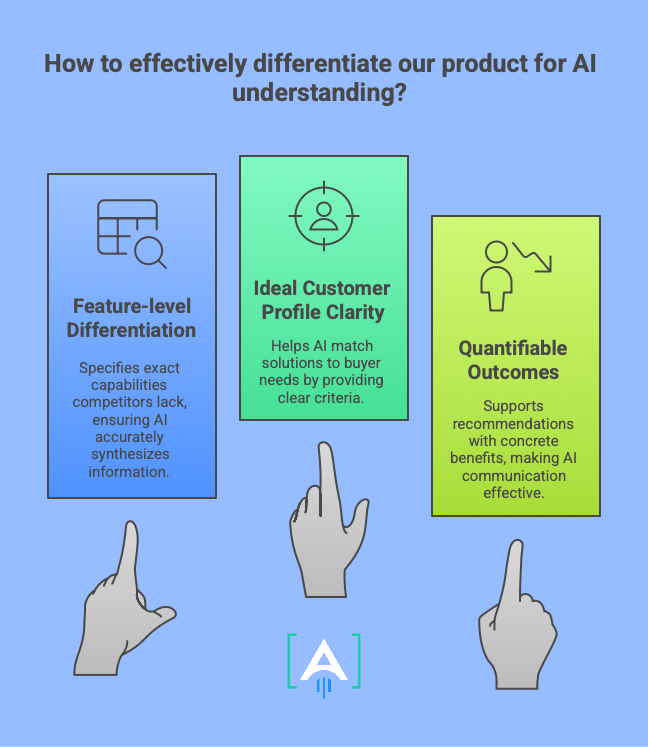
AI assistants frequently field comparison queries: “Compare X vs Y” or “Alternatives to Z.” Your differentiation must be explicit enough for AI systems to synthesize accurately.
Feature-level differentiation specifies exact capabilities competitors lack. “Real-time collaboration with version control” beats vague “better teamwork.”
Ideal customer profile clarity helps AI match solutions to buyer needs. “Designed for 50-500 employee SaaS companies” provides matching criteria AI can use.
Quantifiable outcomes support recommendations. “Average 40% reduction in ticket resolution time” gives AI concrete benefits to communicate.
Moreover, data analytics and reporting capabilities track which positioning messages appear in AI responses. This feedback loop informs strategy, focusing resources on high-impact differentiation.
B2B Category Creation GEO
B2B category creation through Generative Engine Optimization establishes your software as the definitive solution in emerging or poorly defined categories. AI platforms prefer citing clear category leaders over fragmented alternatives.
Consequently, category creation builds moats that competitors struggle to overcome. The first mover earning consistent AI citations becomes synonymous with the category itself.
Social media marketing amplifies category creation content, but shouldn’t be the primary distribution. LinkedIn, industry publications, and authoritative sites AI platforms reference matter most.
Defining and Owning Your Category
Category naming requires a balance between clarity and differentiation. The name must clearly communicate the problem solved while distinguishing from existing categories.
Problem articulation establishes why the category exists. Document the specific pain points that traditional solutions fail to address. Make the case for why your category deserves recognition.
Solution framework outlines how your category approaches problems differently. This framework becomes the lens through which AI platforms understand and explain your solution.
Additionally, AI marketing agency specialists implement category creation systematically. This isn’t guerrilla marketing; it’s strategic positioning requiring sustained execution.
Building Category Authority Through Thought Leadership
Original research generates proprietary insights establishing category expertise. Survey customers, compile usage data, or analyze market trends relevant to your category.
Educational content teaches prospects about category concepts before pitching products. AI platforms favor educational material over promotional content when building category understanding.
Industry recognition validates category legitimacy. Speaking engagements, analyst briefings, and media coverage signal to AI platforms that your category deserves attention.
Moreover, conversion rate optimization expertise ensures that when AI-referred traffic does reach websites, conversion rates justify continued optimization investment.
SaaS Competitive Positioning AI
SaaS competitive positioning AI requires explicit comparison frameworks AI systems can parse and communicate accurately. Buyers frequently ask “Compare A vs B,” expecting clear, structured answers.
Furthermore, 91% of marketers say they’re increasing content output in 2025, creating noise AI must filter. Your competitive positioning must be clear enough to break through increasing content volume.
Successful competitive positioning anticipates comparison queries buyers actually ask, then provides structured information that AI can extract and synthesize accurately.
Creating Comparison Content AI Trusts
Feature comparison matrices present capabilities side-by-side in structured formats. AI systems extract this data directly when answering comparison questions.
Ideal customer profiles for each competitor help AI match solutions to buyer needs. “Competitor A works best for enterprises with complex compliance requirements; we excel with mid-market companies prioritizing ease of use.”
Honest assessment builds AI trust. Acknowledging competitors’ strengths while articulating your advantages creates a balanced perspective that AI platforms favor.
Additionally, data analytics and reporting platforms monitor which competitive messaging appears in AI responses. This competitive intelligence guides positioning refinement.
Handling Competitive Displacement
When competitors own category mindshare, displacement requires systematic competitive positioning. AI platforms naturally recommend established players unless presented compelling alternatives.
Alternative positioning frames your solution as a superior choice for specific segments. “If you’re frustrated with X’s complexity, try our streamlined approach.”
Migration guides reduce switching friction. Document how customers transition from competitors, addressing common concerns AI platforms surface when buyers research switching.
Customer stories featuring competitive displacement demonstrate real-world success. AI assistants reference these when buyers express concerns about leaving current solutions.
Buyer Journey AI Search
Buyer journey AI search reflects how prospects research software through conversational interactions with AI assistants rather than linear website journeys. Understanding this new path enables positioning optimization.
Consequently, traditional funnel stages (awareness, consideration, decision) still exist but happen within AI conversations rather than across website visits. Each stage requires different content AI can reference.
Content marketing must address all journey stages in formats AI can extract and synthesize contextually based on where buyers are in their research.
Awareness Stage AI Optimization
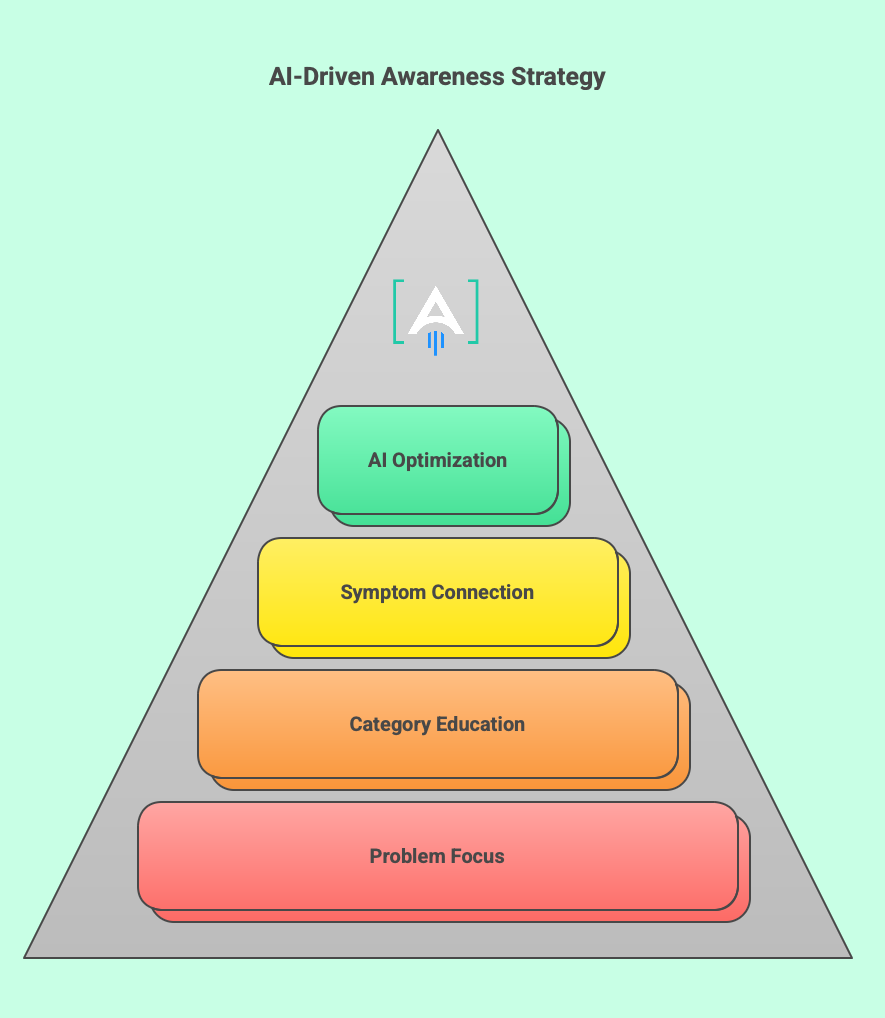
Problem-focused content helps prospects understand pain points before evaluating solutions. AI platforms reference this when buyers ask exploratory questions.
Category education introduces your solution category to prospects unaware it exists. This foundational content establishes context for later product discussions.
Symptom documentation connects business problems to software solutions. When buyers describe symptoms rather than solutions, AI matches them to relevant categories.
Furthermore, AI content optimization ensures awareness content ranks highly in AI recommendation hierarchies. Early visibility shapes consideration sets before competitors enter discussions.
Consideration and Decision Stage Content
Feature deep-dives provide technical detail prospects need for evaluation. AI extracts specific capabilities when buyers ask detailed feature questions.
Implementation guides address practical deployment concerns. “How long does implementation take?” gets answered with documented timelines and resource requirements.
ROI calculators and business case templates support decision-making. AI references these when buyers need to justify purchases internally.
B2B Thought Leadership AI
B2B thought leadership AI positions executives as authoritative sources AI platforms cite. This personal authority transfers to company positioning, building trust that influences purchase decisions.
Additionally, California and UK companies lead with 96% reporting AI-searchable content, compared to 93% in France and 83% in Germany. Geographic leaders demonstrate commitment to AI discovery optimization.
Systematic thought leadership programs generate consistent AI citations that compound over time, building authority that competitors struggle to overcome.
Executive Positioning for AI Citation
Original perspectives on industry trends establish thought leadership. AI platforms favor unique viewpoints over consensus opinions when curating expert sources.
Data-backed insights support claims with research. AI assistants reference quantitative analysis when buyers need evidence-based recommendations.
Future predictions position executives as forward-thinking. When buyers ask about industry direction, AI cites leaders demonstrating vision.
Furthermore, social media marketing amplifies thought leadership through LinkedIn, where AI platforms monitor professional discourse for authoritative voices.
Multi-Channel Thought Leadership Distribution
Industry publications provide citation authority. Articles in recognized trade journals signal expertise AI platforms recognize and reference.
Podcast appearances create long-form content AI can analyze. Conversational formats demonstrate depth that short-form content can’t match.
Conference speaking builds credibility beyond written content. Speaking engagements at recognized events signal industry recognition AI systems value.
Moreover, AI marketing agency specialists coordinate multi-channel thought leadership systematically. Sustained programs generate cumulative authority individual efforts cannot achieve.
Measuring Success in AI Discovery
Traditional SaaS marketing metrics (website traffic, demo requests, free trial signups) remain important but don’t capture AI discovery impact. Expand measurement to include AI-specific indicators.
Consequently, track brand mentions in AI responses through systematic query testing. Document which competitor questions surface your brand and how AI positions you relative to alternatives.
Brand search volume serves as proxy for AI-driven awareness. When content appears in AI responses without direct links, users often search brands directly to learn more.
Essential AI Discovery Metrics
Citation frequency measures how often AI platforms reference your brand, executives, or content when answering relevant queries. Monthly testing tracks trends.
Competitive displacement rate shows how often your brand appears in AI responses about competitors. This indicates successful alternative positioning.
AI-referred traffic from platforms providing click-through links quantifies direct attribution. Configure GA4 to segment ChatGPT, Perplexity, and AI Overview sources.
Additionally, data analytics and reporting platforms unify traditional and AI discovery metrics. Comprehensive dashboards show performance across all discovery channels, guiding optimization priorities.
Competitive Intelligence Through AI Monitoring
Track which competitors appear in AI responses for your category. This reveals positioning strengths to emulate and weaknesses to exploit.
Analyze how AI describes competitors. The language AI uses signals which positioning messages resonate and which get filtered out.
Monitor emerging competitors gaining AI visibility before traditional metrics surface them. Early awareness enables proactive competitive response.
Conclusion
B2B SaaS positioning AI era has fundamentally shifted from website-centric to AI-first discovery. With AI platforms now the second-largest qualified lead source at 34%, and only 11% of B2B marketers ready for AI discovery, massive opportunity exists for prepared competitors.
Azarian Growth Agency combines over 20 years of growth marketing expertise with cutting-edge B2B SaaS capabilities. We’ve helped clients secure over $4 billion in funding and generate more than $500 million in revenue through systematic positioning strategies designed for AI discovery realities.
Our SaaS marketing agency services implement positioning frameworks earning AI citations and recommendations.
We build the content architecture, competitive positioning, and thought leadership programs that capture demand when buyers research through ChatGPT, Perplexity, and AI Overviews rather than traditional channels.
Partner with us to build your AI-first positioning strategy. We combine strategic guidance with technical implementation, helping you win category leadership when buyers discover software through AI assistants rather than website visits.