
In 2026, brands must embrace Search Everywhere Optimization (SEvO) to ensure their voice, video, and virtual experiences are discoverable across every platform and touchpoint.The customer journey has completely evolved. In 2026, discovery no longer begins with Google. It begins everywhere.
A potential buyer might first encounter your brand in a TikTok video, then check Amazon reviews, continue the search through an Alexa voice prompt, and finally confirm their decision with a ChatGPT query. This multidirectional pattern marks the end of linear marketing funnels.
The future belongs to brands that understand how search, social, and shopping are converging into a single omnipresent ecosystem.
This article explores how voice, video, and virtual experiences are merging into one powerful customer journey. It shows how TikTok Shop and social commerce are redefining product discovery, why Amazon’s video ads with Alexa are transforming voice-based advertising, and how to prepare a Search Everywhere Optimization (SEvO) strategy for 2026.
For business owners and marketers, mastering an omnichannel marketing strategy today means staying relevant tomorrow. Partnering with a strategic marketing agency will ensure your brand not only adapts but thrives in this new era.
The Death of the Linear Funnel
The traditional awareness-to-purchase funnel no longer reflects real consumer behavior. Modern audiences do not move in predictable stages. They jump between devices, platforms, and intent states within seconds.
Customers can start their journey anywhere: a TikTok video, an influencer recommendation, or a ChatGPT search for “best skincare products in 2026.” The buying process has become circular and fluid, driven by micro-moments that merge social validation, search intent, and shopping readiness all at once.
A 2025 HubSpot report revealed that 73% of consumers interact with three or more touchpoints before purchase. This means old attribution models fail to capture where influence actually happens. The solution is to map multi-touch journeys rather than one-dimensional funnels. Awareness, engagement, and conversion now overlap, creating the need for unified commerce strategy and multi-platform marketing.
Social as Search: The Gen Z Discovery Engine
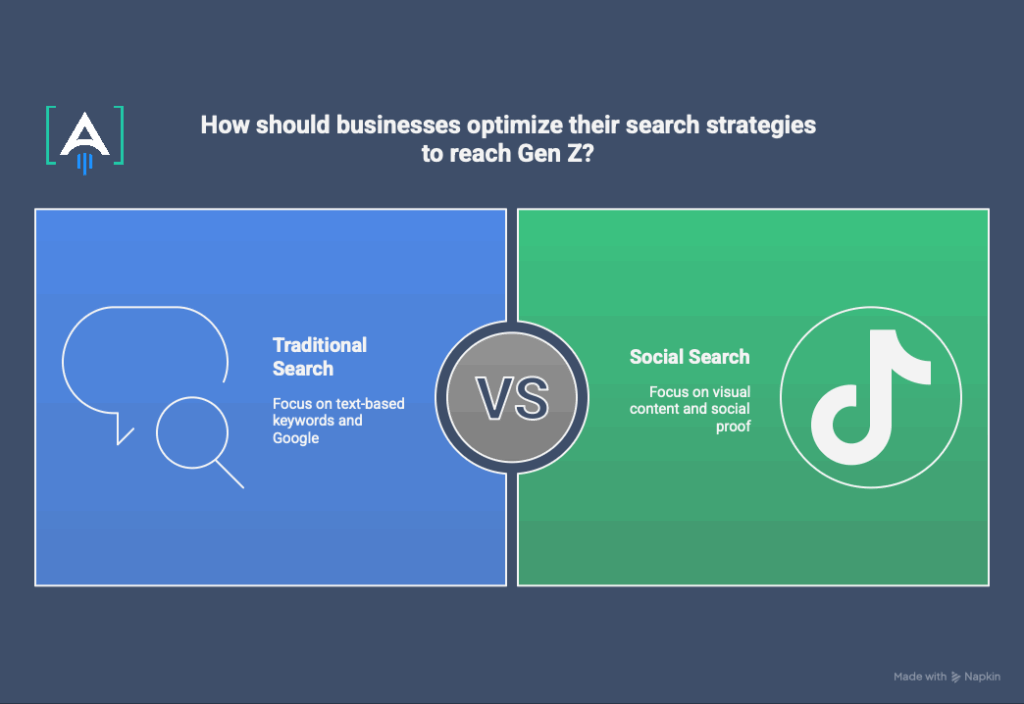
Social platforms have become the new search engines for Gen Z. Young consumers now turn to TikTok, Instagram, and Pinterest instead of Google to find products, restaurants, and even services.
According to Google’s own internal data, over 40% of Gen Z users prefer TikTok and Instagram for search instead of Google Search or Maps.
Unlike traditional search, social search thrives on visual content and social proof. A creator’s video review or an Instagram Reel demonstrating a product holds far more weight than a text snippet. Algorithms on platforms like TikTok reward searchable captions, relevant hashtags, and topic clustering, turning content creators into real-time search engines.
For business owners, this shift demands social search optimization. Every video, caption, and even comment must include searchable keywords that align with how users actually search within these apps.
Optimizing content for discovery instead of just keywords ensures consistent visibility in a platform-driven world.
TikTok Shop: The 2025 E-Commerce Disruptor
TikTok Shop is reshaping e-commerce by combining entertainment, authenticity, and instant checkout. The platform turns organic content into a transactional experience where discovery and purchase coexist.
In 2025, TikTok Shop sales grew over 180% year-over-year. Live shopping events outperform traditional online stores in engagement and conversion. This reflects a behavioral shift where consumers expect shopping to be part of their entertainment experience.
Brands like ELF Cosmetics and Maybelline have leveraged TikTok Shop to achieve record-breaking growth by combining influencer partnerships, shoppable videos, and creative storytelling. Business owners should ask:
- Is your audience discovering products on TikTok before Google?
- Do you have a presence or partner store on TikTok Shop?
- Are your videos optimized for commerce-enabled discovery?
Those who answer yes are already ahead in the new digital economy.
Voice Commerce: Alexa’s Advertising Evolution
Voice commerce is transforming from a novelty to a major growth driver. With Amazon integrating visual elements into Alexa devices, the gap between voice and visual interaction has closed.
Consumers now ask Alexa for product recommendations and instantly see sponsored product videos or summaries on their Echo Show devices. This creates a full-funnel experience through conversation.
Global voice commerce sales are projected to surpass $30 trillion by 2026. To prepare, brands must optimize for conversational keywords and design content that sounds natural when spoken aloud.
Best practices for voice commerce optimization include:
- Writing product descriptions using natural dialogue patterns
- Including question-based FAQs that mirror customer voice queries
- Structuring content with schema markup for AI recognition
- Monitoring voice analytics for keyword and conversion insights
Voice commerce advertising represents one of the fastest-emerging opportunities for omnichannel marketing.
Amazon Reviews as the New Search Engine
Before making a purchase, many customers now consult Amazon reviews instead of traditional search engines. This behavior has transformed reviews into a powerful discovery tool where shoppers evaluate products, compare alternatives, and validate decisions.
82% of online shoppers consider reviews one of the most influential factors in their buying process.
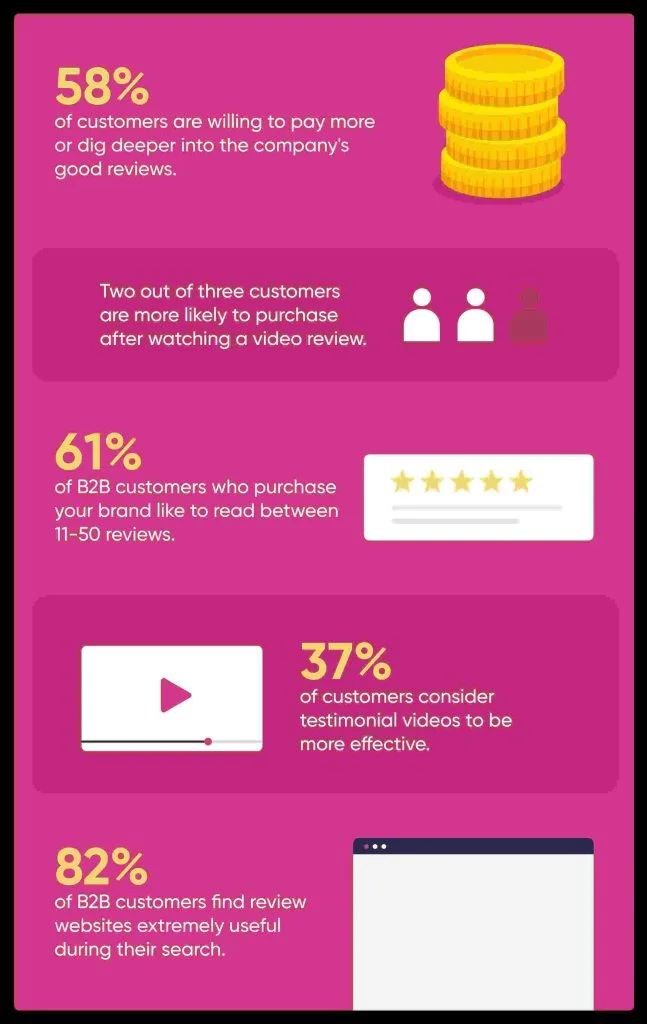
Amazon’s AI-generated review summaries help users quickly identify product quality, key features, and potential drawbacks. These summaries reduce decision fatigue and increase trust, effectively turning user-generated content into a navigable search resource. Shoppers can now search within reviews for specific information such as size, performance, or compatibility.
From a marketing perspective, each review becomes actionable data. Brands can analyze keyword frequency in positive reviews to improve product listings, optimize SEO, and guide paid search campaigns. Feedback on product benefits or issues provides insight for messaging, product development, and customer support.
Encouraging detailed and authentic reviews is essential for discovery commerce. Businesses can request reviews through post-purchase emails, loyalty programs, or clear guidance on writing helpful feedback. Integrating reviews into a broader search everywhere optimization strategy ensures user-generated content contributes to visibility across social, voice, and marketplace search.
In 2026, leveraging Amazon reviews effectively is a core element of an omnichannel marketing strategy that drives trust, engagement, and conversions.
Instagram Shopping: From Discovery to Checkout
Instagram has evolved into a complete shopping ecosystem. Users can discover, evaluate, and purchase products without leaving the app.
Through features like product tagging in Reels, shoppable posts, and live-stream shopping, Instagram connects storytelling directly with conversion. The key for brands is to blend inspiration with accessibility.
Business owners should focus on:
- Creating scroll-stopping Reels with product tags
- Partnering with influencers for authentic recommendations
- Ensuring a frictionless checkout experience through Meta’s commerce integration
A unified commerce strategy ensures that these interactions are not fragmented but connected, giving users a consistent brand experience across every touchpoint.
ChatGPT Search: The New Pre-Purchase Research Tool
AI assistants like ChatGPT are now part of the pre-purchase journey. Consumers use them to compare products, understand features, and validate decisions.
This change means brands must optimize content not only for human readers but for AI summarization and conversational discovery. The goal is to appear as a trusted, authoritative source within AI-driven recommendations.
To prepare, businesses should:
- Structure content using natural questions and answers
- Include semantically rich headings and clear intent
- Focus on accuracy, expertise, and external credibility through backlinks
Being optimized for generative AI search ensures visibility even beyond traditional search platforms.
Platform Convergence: Everyone Copies Everyone
The boundaries between search, social, and shopping have disappeared. YouTube now features shoppable links in Shorts. TikTok introduces photo posts and shopping feeds. Google integrates visual discovery within search.
This platform convergence creates opportunities and challenges. Brands must ensure message consistency while tailoring formats to each ecosystem. Success depends on multi-platform marketing that maintains unified branding across every entry point.
In practice, this means repurposing one creative idea across multiple formats. A video tutorial can become a TikTok clip, a Pinterest Pin, an Instagram Reel, and a YouTube Short, each optimized for platform-specific algorithms.
SEvO Strategy: Search Everywhere Optimization
Search Everywhere Optimization (SEvO) is the evolution of SEO. It ensures your brand is discoverable across every channel where customer journeys begin.
The SEvO framework includes:
- Auditing your current presence across social, search, and shopping platforms
- Mapping customer journeys across voice, video, and visual touchpoints
- Aligning messaging, visuals, and metadata for multi-modal commerce
- Measuring unified analytics to identify top-performing discovery points
Unlike traditional SEO that focuses on one search engine, SEvO prepares your brand to appear everywhere your customer searches.
Attribution Challenges in a Multi-Start World
When discovery happens across dozens of platforms, traditional attribution models no longer provide an accurate picture. Businesses cannot rely solely on last-click metrics because influence and brand engagement often occur long before a conversion happens. A potential customer might discover your product on TikTok, research it through Amazon reviews, consult ChatGPT for guidance, and then complete the purchase on your website. Without tracking these interactions, brands underestimate the value of early-stage discovery channels.
Unified analytics platforms and multi-touch attribution models are essential to solve this challenge. 74% of marketers have adopted multi-touch attribution systems to measure full-funnel performance and assign credit to every meaningful touchpoint.
Assigning value to early-stage channels such as TikTok, Instagram, and voice assistants allows businesses to make smarter marketing budget decisions and diversify their platform strategies effectively. This approach supports both a multi-platform marketing perspective and a unified commerce strategy, ensuring that each discovery channel contributes to measurable growth.
Content Strategy for Omnipresent Discovery
Modern content strategies must operate seamlessly across multiple platforms and formats to capture attention in an omnipresent environment. Repurposing is no longer optional; it is essential for maintaining visibility across the evolving customer journey. One piece of long-form content can fuel weeks of engagement on TikTok, Instagram, YouTube, and voice platforms while reinforcing your omnichannel marketing strategy.
A strong content repurposing framework includes:
- Starting with a long-form video, article, or podcast as the primary asset
- Extracting short clips for TikTok, Instagram Reels, YouTube Shorts, and social stories
- Turning transcripts into blog posts, LinkedIn articles, or quote cards
- Using audience feedback to inspire new content iterations and adjustments
Incorporating creator-led campaigns, influencer commerce, and live shopping events humanizes brands and strengthens trust. These strategies not only enhance engagement but also drive measurable conversion while supporting social commerce trends, video commerce, and live shopping events.
By aligning content with each platform’s discovery mechanism, businesses can ensure that every asset contributes to search everywhere optimization and a consistent customer journey.
The Technology Stack for Multi-Platform Success
Effective omnichannel marketing requires a well-integrated technology stack that bridges analytics, automation, and commerce. Businesses that unify these systems can track performance, manage campaigns, and optimize content across all platforms without losing insights in siloed tools.
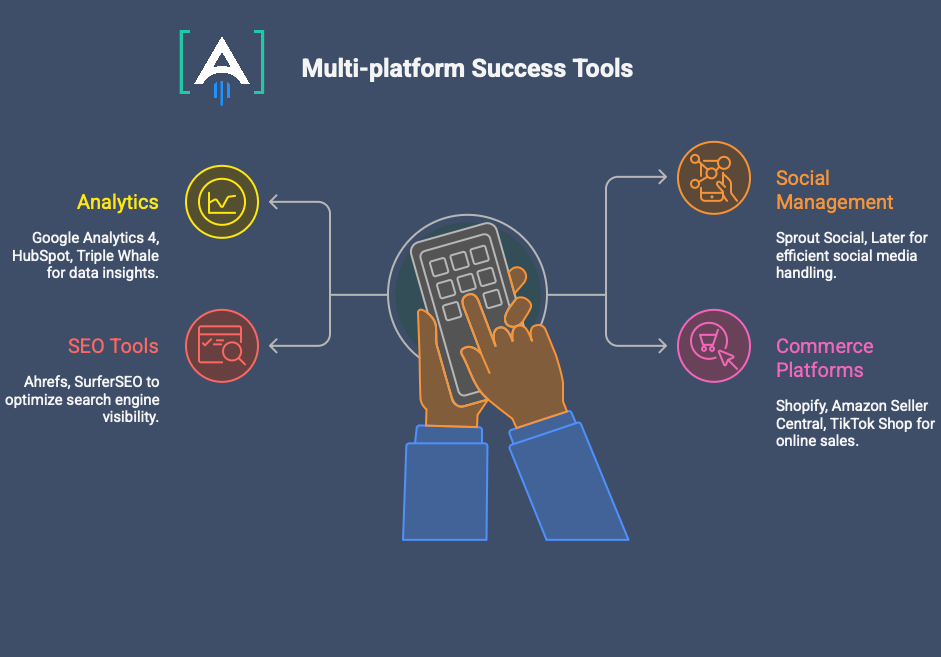
Essential tools for multi-platform success include:
- Analytics: Google Analytics 4, HubSpot, Triple Whale
- Social Management: Sprout Social, Later
- SEO Tools: Ahrefs, SurferSEO
- Commerce Platforms: Shopify, Amazon Seller Central, TikTok Shop
Choosing interoperable tools instead of isolated software ensures seamless tracking, allows for multi-modal commerce, and strengthens unified commerce strategy implementation. This stack supports cross-platform campaigns, attribution modeling, and customer journey mapping in 2025, enabling brands to optimize for both discovery and conversion across voice, video, and virtual channels.
Case Study: Brands Winning Across All Platforms
Nike provides a clear example of omnipresent marketing success by blending voice, video, and virtual touchpoints.
The brand leverages TikTok for storytelling and product launches, monitors Amazon reviews to gain insights into consumer perception, and uses AI-driven personalization on its website to improve conversions. Nike’s strategy ensures consistency across platforms while adapting content to the discovery habits of each audience segment.
Smaller direct-to-consumer brands also achieve rapid growth by implementing SEvO frameworks that prioritize visibility across multiple platforms instead of dominating just one.
They focus on adapting content to the unique requirements of each channel, such as short-form video for TikTok, influencer-led campaigns for Instagram, and voice-optimized descriptions for Alexa or Google Assistant. The key takeaway for business owners is that consistent, multi-platform content with measurable attribution separates leading brands from their competitors.
The Future of Omnipresent Marketing
Search, social, and shopping are no longer separate silos. They are interconnected components of a fluid digital ecosystem where customers engage in discovery, research, and purchase across multiple touchpoints.
To succeed in 2026, brands must master presence synchronization, ensuring they appear authentically and intelligently wherever discovery occurs.
Businesses that unify their strategies across channels, leverage customer touchpoint optimization, and employ multi-modal commerce approaches will capture opportunities faster than competitors. Creativity, data, and measurement working together enable brands to build trust, accelerate conversions, and drive sustainable growth.
Conclusion: Partner with Azarian Growth Agency for Omnipresent Success
At [A] Growth Agency, we help business owners and CEOs navigate the complex convergence of voice, video, and virtual commerce.
Our team specializes in building Search Everywhere Optimization strategies, creating data-driven content, and implementing scalable omnichannel marketing strategies. We ensure your brand is visible, discoverable, and engaging across all platforms, from TikTok and Instagram to voice assistants and Amazon.
If you are ready to capture growth in a multi-platform world and transform discovery into measurable sales, schedule a consultation with us today. Our approach integrates creative storytelling, analytics, and unified commerce strategies so your business can lead in the era of omnipresent marketing.
Partner with us to make sure your brand is everywhere your customers look, ready to convert at every touchpoint.