
When business owners explore brand experience design, they unlock the power of every interaction to fuel growth. Every touchpoint from a website visit to post-purchase affects how customers perceive your brand. A strong brand experience turns casual visitors into loyal advocates and drives measurable business results.
In this article, we will break down how brand experience design intersects with key branding elements to create consistent growth-focused outcomes. You will learn how
- A brand development guide provides a roadmap for building cohesive customer experiences
- Visual identity design ensures your brand is instantly recognizable across every channel
- Brand voice development keeps messaging consistent, clear, and engaging
- Brand guidelines templates help teams maintain alignment at every touchpoint
- A brand strategy framework orients your branding decisions toward growth
Whether you are refining a brand launch strategy or exploring a rebranding strategy, understanding these components is critical. A cohesive approach transforms your branding efforts from aesthetic updates into strategic growth drivers.
Choosing the right marketing branding agency is also vital. A professional agency brings expertise, market insights, and experience in optimizing every touchpoint. They help you
- Audit your current brand experience and identify gaps
- Integrate visual and verbal brand elements seamlessly
- Apply data-driven touchpoint optimization strategies
- Track measurable results and adjust strategy for maximum impact
By the end of this article, you will have a clear framework to apply brand experience design across your business, turning every customer interaction into an opportunity for growth.
Let us explore how each element contributes to a fully optimized brand experience that fuels business success.
What Is Brand Experience Design?
Brand experience design centers on how your audience perceives and interacts with your brand across all touchpoints. It’s not just about the logo or visuals, but about holistic experiences.
In the context of a brand strategy framework, you must view each interaction as part of the broader customer journey.
The term “customer brand experience” highlights that every moment matters and that touchpoint optimization is the strategic goal.
Here are the core components:
- Visual identity design: how your brand looks in every channel
- Brand voice development: how your brand sounds and feels in messaging
- Customer interactions: online, offline, support, packaging
- Brand guidelines template: the document that ensures consistency
When you adopt brand experience design as a growth tool, you move from branding as decoration to branding as performance.
Why Brand Experience Design Is Critical For Growth
When you optimize for brand experience design, you create stronger brand loyalty and higher revenue impact. For example, companies leading in customer experience grow revenue 80% faster than competitors.
Other data points:
- Consistent brand presentation across all platforms can increase revenue by up to 10‑20%.
Consider recognisable brands like Apple: their brand experience design flows seamlessly across devices, retail stores, service, and packaging. That consistency builds trust, recognition, and loyalty.
From a growth‑marketing perspective, this means your branding is not just aesthetic. It’s strategic. It supports conversions, retention, and advocacy.
If your touchpoints feel disjointed or inconsistent, you risk losing momentum. A smart brand development guide paired with a brand strategy framework helps bring cohesion.
Framework For Implementing Brand Experience Design
To implement brand experience design effectively, you need a clear, structured approach. Below is a brand strategy framework broken into actionable steps you can follow.
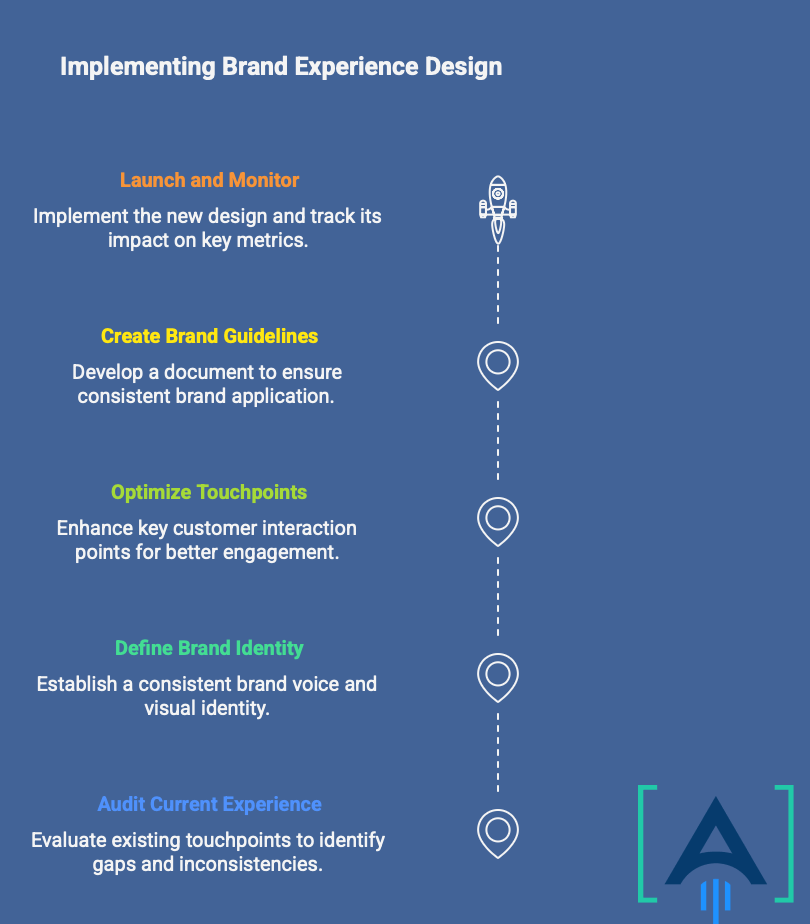
Step 1: Audit Your Current Brand Experience
Begin by mapping all existing touchpoints for your brand. Include website, social media, in‑store (if relevant), packaging, customer service, and after‑sales. Identify gaps, inconsistencies, and weak moments.
Use a checklist like:
- Are visuals consistent (logo, colour, typography) across all channels?
- Does the tone of voice match your brand promise?
- Are touchpoints aligned with how your audience expects to engage?
- Which interactions lead to friction or drop‑off?
This audit sets the foundation for improvement.
Step 2: Define Your Brand Voice And Visual Identity
Your brand voice development and visual identity design are the expressive elements of your brand. They shape how you are perceived.
Key actions:
- Establish tone of voice guidelines (e.g. friendly, authoritative, quirky)
- Design visual assets (logo, colour palette, fonts, imagery style)
- Create the brand guidelines template that documents these elements
When these are well‑defined, every touchpoint begins to feel unified and compelling.
Step 3: Optimize Key Touchpoints
Focus on touchpoint optimization: every time a customer interacts with your brand is a chance for growth.
Consider:
- Website experience: speed, clarity, mobile‑first design
- Social media interactions: consistent visuals, engaging voice
- Customer support: quick response, context awareness (64% will spend more if their issue is resolved where they already are) zendesk.com
- Packaging or product unboxing: the moment of delight matters
Here are 5 practical tips:
- Personalise interaction where possible (e.g. “Welcome back, X”)
- Ensure visual consistency across channels so recognition is immediate
- Reduce friction: streamline checkout, support, returns
- Use storytelling that reflects your brand voice and values
- Monitor post‑purchase interactions to nurture loyalty
Step 4: Create Brand Guidelines And Templates
Once your voice and visuals are defined, it is time to lock in consistency via a brand guidelines template. This document should include:
- Logo usage rules
- Colour palette codes
- Typography specifications
- Voice and tone examples
- Touchpoint examples (digital, print, packaging)
Having these guidelines keeps everyone aligned: marketing, design, sales, and partners.
Step 5: Launch And Monitor Your Brand Experience Design Effort
A launch is not just for new brands. It also applies to major refreshes or rebranding strategies. You need a rollout plan and measurement approach.
Launch steps:
- Internal alignment: ensure your team and stakeholders understand the new design
- External rollout: website update, social launch, packaging update
- Monitor KPIs: NPS, retention rate, conversion rate, engagement on social
For example, you might set a goal: increase customer retention by 15 % in the first year. Then track baseline and progress.
Rebranding Strategy: When And How To Refresh Your Brand Experience Design
At some stage, you may need a rebranding strategy, especially if the market shifts, you expand, or your brand experience no longer aligns with your vision.
Signs you need a rebranding strategy:
- Your brand visuals feel outdated or inconsistent
- Customer feedback indicates a mismatch between perception and promise
- Your touchpoints fall short of modern expectation
When you trigger a refresh, integrate brand experience design into the process so the new visuals, voice and interactions all align.
For instance, a well‑known brand such as Burberry shifted its store experience, digital presence and service model together; not just the logo. The result: stronger luxury positioning and growth.
Remember growth marketing requires that you treat the refresh as an opportunity to re‑engage customers, launch campaigns showing the new experience, and measure uplift.
Measuring The Impact Of Brand Experience Design
Tracking the impact of brand experience design is essential to understand what drives growth and what needs improvement. Without measurement, even the best strategies remain guesswork.
Some key metrics to monitor include:
- Net Promoter Score (NPS) to gauge customer loyalty and advocacy
- Customer retention rate to see if clients return over time
- Conversion rate and average order value to track financial impact
- Engagement metrics across social media, website, and apps to evaluate interaction quality
Data shows that companies leading in customer experience outperform others by around 80 % (UserGuiding). This demonstrates the direct link between brand experience and measurable growth.
More than half of consumers (52 %) say they stopped buying from a brand because of a bad experience. This emphasizes that every touchpoint matters.
Presenting these insights to CEOs and business owners positions brand experience design as a tangible growth driver, not just a branding exercise.
For example, a SaaS company improved its onboarding touchpoint and increased retention by 30 percent. That enhancement directly boosted lifetime value and revenue.
To effectively measure impact:
- Define baseline metrics before implementing any changes
- Apply improvements strategically across touchpoints
- Survey customers to track changes in perception and satisfaction
- Monitor conversion and retention outcomes continuously
- Iterate based on results to optimise future interactions
By following this approach, business owners can connect brand experience efforts directly to growth metrics, making it clear how design decisions affect overall business performance.
Future‑Proofing Your Brand Experience Design
In a world of rapid change your brand experience design must evolve to stay ahead. Today’s consumer expectations are higher, faster and more personalized than ever.
Key trends:
- Hyper‑personalisation: Six out of ten millennials expect brands to present a consistent image and message across every platform, creating a seamless brand story that strengthens loyalty.
- Omnichannel integration: seamless experience across mobile, in‑store, and digital
- Immersive experiences: AR, VR, interactive storytelling
- Ethical & sustainable branding: Beyond buying and using products, nearly 80 % of consumers engage with brands through other channels, including reading content or interacting on social media.
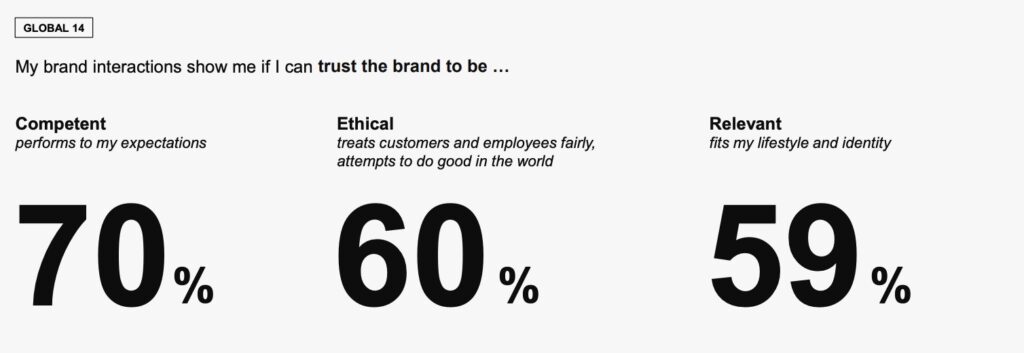
As you prepare your brand for the future, include these elements in your brand development guide and brand strategy framework. This helps you remain relevant while keeping the business strategy aligned with growth ambitions.
Business owners and CEOs should view this as not just optional but critical: your brand experience design is a competitive differentiator.
Conclusion
Brand experience design is more than just aesthetics; it is a strategic approach that turns every customer touchpoint into a measurable growth opportunity. From the first impression to long-term loyalty, how your brand presents itself shapes perception, trust, and engagement.
By combining a strong brand development guide, a clear brand strategy framework, cohesive visual identity design, consistent brand voice development, and a practical brand guidelines template, business owners can ensure every interaction supports growth.
Whether refining a brand launch strategy or executing a full rebranding strategy, each decision should aim to strengthen the customer brand experience.
At Azarian Growth Agency we understand that executing these strategies effectively requires expertise, insight, and a holistic approach.
We help CEOs and business owners conduct brand audits, define compelling voices and identities, optimize touchpoints, and implement full brand experience design.
Our growth marketing execution ensures that every element of your brand works together to drive measurable results and long-term business impact.
If you are ready to elevate your brand beyond visuals and messaging, partner with Azarian Growth Agency to transform every interaction into an opportunity. Together we can craft a brand experience that not only resonates but also grows with your business.
Let’s turn every touchpoint into a step toward success.