
AI-first website architecture represents the technical foundation businesses need to succeed in dual search paradigms. Business owners and CEOs must now build websites that perform in both traditional Google search and emerging AI platforms like ChatGPT, Perplexity, and Google AI Overviews.
The stakes are high. Only 12.4% of domains currently use schema markup, yet pages with structured data see up to 35% higher click-through rates. Additionally, AI platforms now serve over 2 billion users monthly through features like Google AI Overviews. Your website either speaks the language AI systems understand or becomes invisible in the search landscape, reshaping digital discovery.
In this guide, we’ll break down the technical architecture that wins in both search paradigms, covering schema markup implementation, content structure for AI extraction, and performance requirements that satisfy both traditional crawlers and AI systems.
Understanding AI-First Website Architecture
AI-first website architecture prioritizes machine readability alongside human user experience. Traditional web design focused exclusively on visual presentation and navigation. Modern architecture must communicate clearly with AI systems that parse, synthesize, and recommend content.
Furthermore, this dual optimization doesn’t mean choosing between search engines and AI platforms. The technical foundations that help Google understand your content also enable ChatGPT and Perplexity to extract accurate information. Structured data, semantic HTML, and clear content hierarchy benefit all discovery channels simultaneously.
The shift demands rethinking information architecture from the ground up. AI systems don’t navigate like humans browsing menus and clicking links. They analyze structured data, extract specific content blocks, and synthesize information across sources. Your website must facilitate this extraction while maintaining excellent human experiences.
The Dual Search Optimization Challenge
Traditional search optimization focused on keywords, backlinks, and technical performance. Google ranked pages based on relevance signals accumulated through algorithmic analysis. This paradigm still matters, but AI search adds entirely new requirements.
Consequently, generative AI platforms like ChatGPT don’t rank websites; they synthesize information from multiple sources into unified responses. Your content must be extractable in discrete, citable blocks rather than sprawling narratives. AI systems favor clear structure, semantic markup, and authoritative signals over keyword density.
Website building agency expertise becomes essential for navigating these dual requirements. The technical complexity of satisfying both paradigms exceeds typical web development capabilities.
Schema Markup Evolution for AI Search
Schema markup provides structured data that tells search engines and AI systems exactly what your content represents. This machine-readable format enables an accurate understanding beyond what AI can infer from raw HTML.
Moreover, according to 72% of marketers, their most impactful SEO strategy is publishing high-quality content. Yet 23% of websites still lack any structured data, missing critical visibility opportunities in both traditional and AI search.
JSON-LD has become the preferred schema format, adopted by 49.7% of websites using structured data. This JavaScript-based approach separates markup from page content, making implementation cleaner and maintenance easier than embedded microdata.
Critical Schema Types for AI Platforms
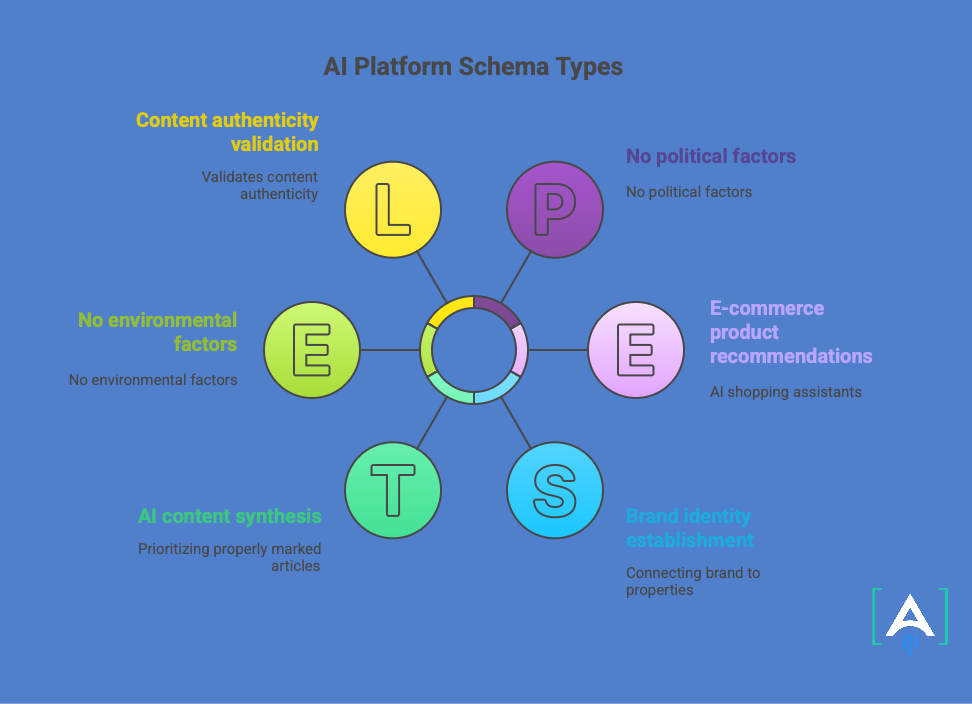
Organization Schema establishes your business entity, connecting your brand to associated properties like social profiles, contact information, and knowledge graph entities. This foundational markup helps AI systems understand who you are across platforms.
Article Schema signals content type, publication date, author information, and article structure. AI platforms prioritize properly marked articles when synthesizing information, as the schema validates content authenticity and currency.
FAQPage Schema structures question-answer content that AI systems extract directly. The FAQ schema appears in 80.92% of AI Overview query results, making it essential for visibility in AI-generated responses.
Product Schema for e-commerce sites includes pricing, availability, reviews, and specifications. This structured data enables AI shopping assistants to accurately recommend products based on user requirements.
Additionally, LocalBusiness Schema helps businesses appear in local AI recommendations and map results. Geographic targeting through structured data becomes increasingly important as AI personalizes responses.
Content Architecture for AI Extraction
AI systems extract content in discrete blocks rather than consuming entire pages. Your content architecture must facilitate this extraction while maintaining narrative flow for human readers.
Consequently, modular content design creates self-contained sections that make sense independently. Each heading-delimited section should answer specific questions or explain discrete concepts. AI can lift these blocks into responses without losing meaning.
Use semantic HTML5 elements: <article>, <section>, <aside>, and <nav>. These tags provide structural context that helps AI understand content hierarchy and relationships. Generic <div> tags offer no semantic meaning.
Structuring Content for Dual Audiences
Clear heading hierarchy (H1, H2, H3) organizes information logically. AI systems use headings to understand topic structure and identify quotable segments. Never skip heading levels or use headings for styling alone.
Concise answer blocks respond directly to user questions. Write 2-3 sentence answers that AI can extract as complete responses. Follow with detailed explanations for users wanting depth.
Bulleted lists present information in scannable formats that both humans and AI prefer. Lists with clear parallel structure extract cleanly into AI-generated responses.
Data tables structure quantitative information that AI platforms can parse and reformat. Properly marked HTML tables enable AI to extract specific data points accurately.
Furthermore, content marketing strategies must adapt to AI extraction patterns. Traditional SEO content stuffed with keywords performs poorly in generative search compared to clear, authoritative answers.
Optimizing for Featured Snippets and AI Overviews
Featured snippets occupy position zero in traditional search, and properly structured content significantly increases snippet eligibility. The same structural principles that win snippets also get content extracted into AI Overviews.
Answer questions directly in 40-60-word paragraphs immediately following question-formatted headings. This “question-answer” structure aligns perfectly with how users query AI systems and how AI extracts information.
Include definitions at the beginning of concept-focused content. AI platforms prioritize definitional content when introducing topics. Clear, authoritative definitions establish your content as a primary source.
Technical Performance Requirements for AI Crawlers
AI crawlers have different performance expectations than traditional search bots. While Google’s crawler is highly optimized, AI systems analyzing content for synthesis require clean, fast-loading pages with minimal technical obstacles.
Core Web Vitals remain critical ranking factors. Largest Contentful Paint under 2.5 seconds, Interaction to Next Paint under 200ms, and Cumulative Layout Shift under 0.1 satisfy both traditional SEO and AI accessibility requirements.
Mobile optimization matters more than ever. AI assistants predominantly serve mobile users seeking quick answers. Your site must deliver excellent mobile experiences with fast load times and readable content without zooming.
Server-Side Rendering and JavaScript Considerations
Heavy JavaScript frameworks can create crawling challenges. While Google handles JavaScript rendering, AI crawlers may struggle with client-side rendered content. Server-side rendering ensures content accessibility for all crawlers.
Implement progressive enhancement rather than relying on JavaScript for core content. Critical information should be accessible in HTML before JavaScript execution. This guarantees AI systems can extract content regardless of rendering capabilities.
Additionally, AI marketing agency specialists understand technical requirements for AI crawler optimization. These nuances determine whether AI platforms can access and recommend your content.
Site Architecture and Navigation
Shallow site architecture enables efficient crawling. Important pages should be accessible within three clicks from the homepage. This flat structure helps both traditional crawlers and AI systems discover content quickly.
XML sitemaps guide crawlers to all important pages. Include priority and change frequency signals that help crawlers allocate resources efficiently. Submit sitemaps through Google Search Console and monitor crawl stats regularly.
Internal linking distributes authority and establishes content relationships. Use descriptive anchor text that clarifies destination content. This contextual linking helps AI understand topic relationships across your site.
Progressive Enhancement Strategies
Progressive enhancement builds websites in layers, starting with core content accessible to all users and platforms, then adding enhanced experiences for capable browsers. This approach ensures AI crawlers access fundamental content while modern browsers enjoy rich experiences.
Start with semantic HTML, providing complete information. Layer CSS for visual styling. Add JavaScript for interactive features. This progression guarantees content accessibility even when JavaScript fails or crawlers don’t execute scripts.
Consequently, conversion rate optimization agency expertise combines technical accessibility with conversion-focused design. The goal is excellent experiences for humans and machines simultaneously.
Accessibility and AI Compatibility
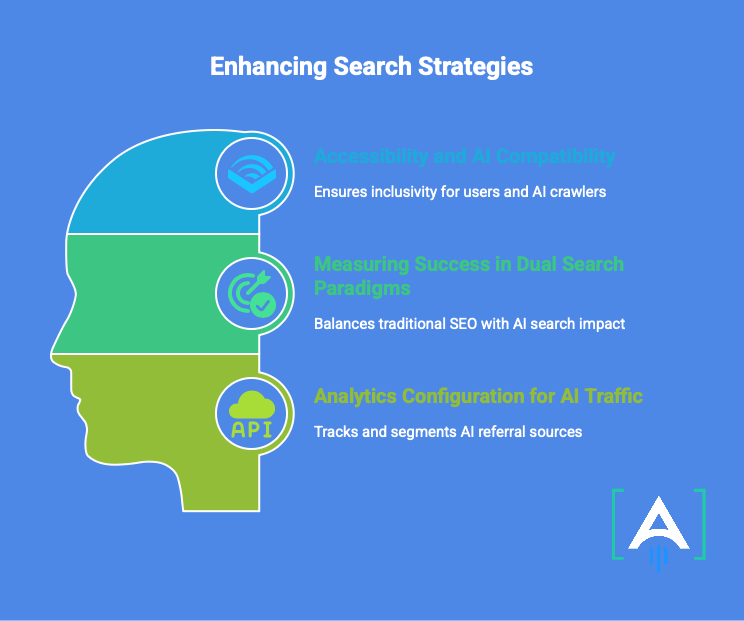
Accessibility standards like WCAG compliance benefit both users with disabilities and AI crawlers. Alt text for images, descriptive link text, and proper ARIA labels provide context that AI systems leverage when analyzing content.
Clear language and straightforward sentence structure improve comprehension for all audiences. AI systems trained on natural language processing can write more accurately than complex, jargon-heavy content.
Structured navigation with breadcrumbs helps users and AI understand site hierarchy. Breadcrumb schema markup formalizes these relationships for machine consumption.
Measuring Success in Dual Search Paradigms
Traditional SEO metrics like rankings and organic traffic remain important, but don’t capture AI search impact. Expand measurement frameworks to include AI visibility metrics.
Track citation frequency in ChatGPT, Perplexity, and Google AI Overviews through systematic query testing. Document that queries surface your content in AI responses. This qualitative analysis reveals AI recommendation patterns.
Monitor brand search volume as a proxy for AI-driven awareness. When your content appears in AI responses without direct links, users often search your brand directly. Brand search increases indicate growing authority.
Analytics Configuration for AI Traffic
Configure GA4 to identify and segment AI referral traffic. Create custom dimensions tracking ChatGPT, Perplexity, and AI Overview sources. This segmentation reveals AI platform contributions to conversions.
Additionally, data analytics and reporting platforms unify traditional and AI search metrics. Comprehensive dashboards show performance across all discovery channels, guiding optimization priorities.
Track engagement metrics for AI-referred traffic: time on site, pages per session, and conversion rates. AI-discovered users often demonstrate different behavior patterns than traditional search traffic.
Conclusion
AI-first website architecture has become essential for visibility in 2026’s dual search landscape. Data reveals that 36.6% of searches produce featured snippets powered by schema markup. Massive competitive opportunities exist for businesses implementing proper technical foundations.
The technical requirements span schema markup implementation, modular content architecture, performance optimization, and progressive enhancement strategies. These elements work together, creating websites that excel in both traditional Google search and emerging AI platforms serving billions of users monthly.
Azarian Growth Agency combines over 20 years of growth marketing expertise with cutting-edge technical capabilities. We’ve helped clients secure over $4 billion in funding and generate more than $500 million in revenue through comprehensive digital strategies. Our website building agency services implement AI-native architecture that performs across all discovery channels.
Our approach integrates AI marketing agency expertise with conversion rate optimization principles. We build technical foundations that attract both AI recommendations and traditional search traffic while converting visitors efficiently. Our content marketing team structures information for optimal AI extraction alongside compelling human narratives.
Partner with us to build your AI-first website architecture. We combine technical implementation with strategic guidance, ensuring your site wins in both traditional and generative search paradigms.